



Products
Distillation
Spirit is the base of most strong drinks, and its strength and purity set the taste and aroma of the finished product.
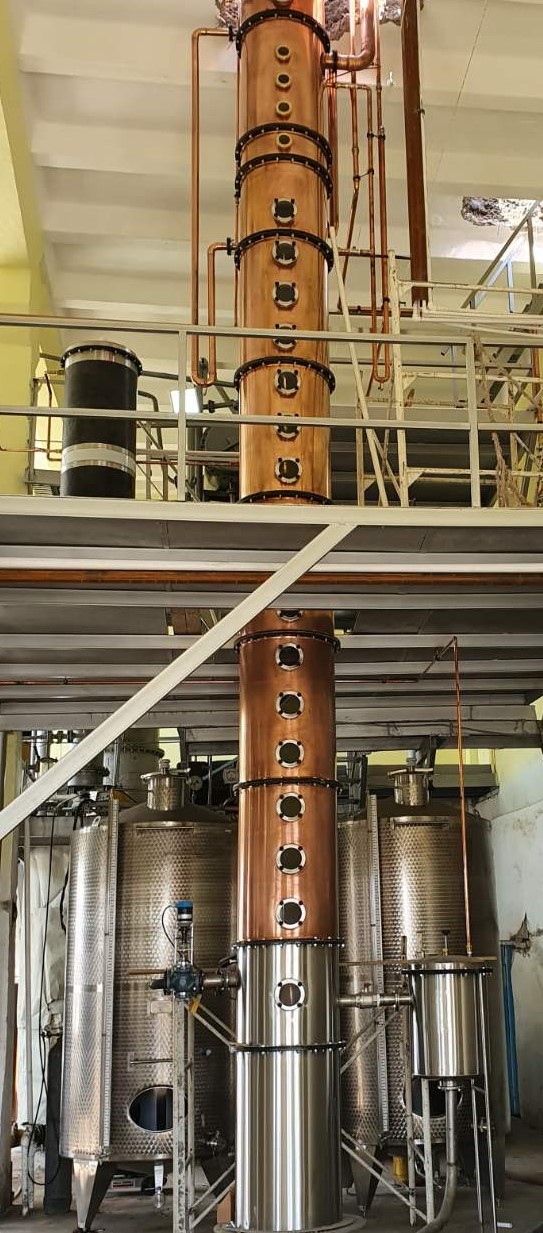
How distillation works
Producing brandy and other strong drinks involves one unavoidable step: removing volatile impurities from the raw material. During distillation, vapour rises from the fermented mash and condensing those compounds produces the distillate. Water boils at 100 degrees Celsius and ethanol boils lower, and that difference is what makes the separation possible.
The first fraction to come across, the heads, is high in strength but also carries aldehydes, volatile acids and esters. It is not fit to drink.
The tails are equally unusable, carrying a high proportion of fusel oils and methanol. That fraction smells unpleasant and forms once strength drops below roughly 40 percent. Tails can be redistilled and put back into alcohol production.
Types of distillation
- Steam distillation, carried out with a steam generator. Combined with multi-stage distillation it produces spirit of the highest quality. The drawback is the floor area the line requires.
- Double distillation, a multi-stage process that raises strength step by step without stripping the aromatic compounds out of the fraction.
Distillation and rectification
Rectification is the other route to ethyl alcohol. A rectification column separates the liquid into its individual fractions. Once fusel oils, methanol and acetone are removed, what comes out is clean spirit with no aroma. The difference is simple: a still gives you a distillate that carries aroma and flavour, a rectification column gives you high strength spirit without impurities.
Equipment we build
- Whisky columns producing the aromatic distillate used as a base for brandy, whisky, grappa and similar drinks. The copper column binds harmful volatile compounds and gives the drink its particular aroma.
- Rectification columns for spirit, where the finished product is high in strength and ready for further processing such as dilution.
Tell us what you need to build
Send us the volumes, the process steps and any drawings you have. We will come back with a specification and a price.